Oil and Gas Training in Kuala Lumpur: Skills for Energy Professionals
Oil and Gas Training in Kuala Lumpur: Skills for Energy Professionals
14/10/2025
Oil and Gas
It starts with a conversation over coffee—an engineer talking through a pipeline issue in East Malaysia, a project lead discussing budget overruns in the Gulf, or a manager weighing the risks of deepwater expansion. The topics shift, but one thing stays the same: the energy sector doesn't slow down, and neither can its people.
That’s why Oil and Gas Training in Kuala Lumpur is turning heads across the region. Not just as a destination, but as a place where professionals recalibrate. Where people walk in with experience and walk out with perspective.
Learning Happens in the Field—But It’s Refined in the Room
Let’s face it, field experience is non-negotiable in this business. But when it comes to making higher-stakes decisions—around safety, investment, or long-term planning—there’s a different kind of learning required. A structured, focused space to revisit what you thought you knew. That’s what these courses in Kuala Lumpur are built around.
You don’t sit through endless theory. You map real-world project cycles. You break down failures—your own or others’—and rebuild them from a systems view. Whether you're in upstream, midstream, or navigating downstream complexities, the format pushes you to think across silos, not just within them.
Why Kuala Lumpur, Not Just Anywhere?
There’s something about the way training is done here. Maybe it’s the mix of industry access and academic clarity. Maybe it’s how Kuala Lumpur has grown into a technical and logistical centrepoint for Malaysia’s energy industry. Or maybe it’s the simplicity—you get in, get sharp, and get back to work.
The city hosts a growing network of BMC-accredited centres, each designed to reflect the tempo of the oil and gas industry. That means smart classrooms, access to case-based simulations, and trainers who’ve done more than teach—they’ve lived the sector.
It’s a learning model that feels closer to a control room than a lecture hall. And that makes all the difference.
Advanced Doesn't Mean Complicated—It Means Real
Too many “advanced” courses feel like they’re designed to impress rather than instruct. That’s not what happens here. The Oil and Gas Training courses in Kuala Lumpur keep things grounded.
You might spend a session simulating a reservoir development strategy or troubleshooting a procurement chain that mirrors your own. The training focuses on the pressures you’re already facing—just from a higher vantage point.
One week you’re on site, managing maintenance priorities under shrinking margins. The next, you’re sitting across from a drilling manager from Oman, comparing approaches and walking away with frameworks you can actually use.
That’s the rhythm these courses strike. High-level, low-fluff.
Everyone's Been in Your Boots—Just in a Different Basin
Walk into any room here, and you’ll recognise the energy. There’s no grandstanding, no one-upping—just shared urgency. Most participants already carry years of oil and gas exposure. What they’re after is sharper thinking, quicker decisions, fewer blind spots.
The discussions span project-level coordination, International Energy Agency standards, equipment reliability, HSE integration, and even the unglamorous—but essential—task of aligning procurement with operations. And the feedback loop? Instant. You test ideas in peer simulations, tweak your assumptions, and see where your thinking lands.
The real value? That moment you catch yourself reworking a process you’ve used for five years, not because someone told you to—but because it just clicked differently this time.
The Tools Stay With You Longer Than the Certificate
Nobody talks much about the certificates. Sure, the centre stamps it, the course meets global standards, tand he accreditation checks out. But what people remember is the shift in how they work.
It’s the project that got rescued because someone redesigned the risk matrix. The maintenance strategy that cut downtime because a supervisor saw a pattern others missed. Or the procurement delay that got solved in hours, not days, because two engineers from opposite ends of Malaysia stayed in touch after a workshop.
These training sessions aren’t isolated events. They’re inflection points. Quiet ones, but with ripple effects.
More Than Career Moves—These Are Perspective Shifts
The oil and gas landscape isn’t just changing—it’s splitting, converging, reconfiguring itself constantly. The rise of new energy players, fluctuating LNG demand, geopolitical risk shifts—it’s a lot. And holding an oil and gas job requires more than just technical competence.
The new advanced modules being offered in Kuala Lumpur reflect that shift. You’ll find conversations on ESG frameworks, digital monitoring, remote asset control, and how cross-border contracts are evolving. This isn’t about jumping ship to new energy sectors—it’s about being ready for whatever your basin, boardroom, or regulator throws at you next.
The point is simple: growth in this sector isn’t vertical anymore. It’s multidimensional. And these training courses are built to match that complexity—without overcomplicating it.
No Badges. Just Better Questions.
There’s a moment in every course—usually midweek—when the focus shifts. You stop collecting answers and start asking better questions. That’s where things start to matter.
What assumptions are baked into your current safety framework? What happens if you reroute your logistics thinking around emissions instead of cost? Are your decision trees built for stability, or just habit?
These are the kind of questions Oil and Gas Training in Kuala Lumpur pushes to the surface. And once they’re out, they tend to stay with you—long after the flip charts and roleplays are done.
Final Note
You won’t walk away from this kind of training with just another model or diagram. You’ll walk away with sharper instincts, better systems awareness, and a network that works as hard as you do. And in a sector where margins are thin, stakes are high, and expectations never let up—that’s worth its weight in gas.
So if you’re looking at Oil and Gas Training in Kuala Lumpur, you’re not just signing up for another course. You’re signing up for the version of you that’s a step ahead of the next curve.
Related Articles
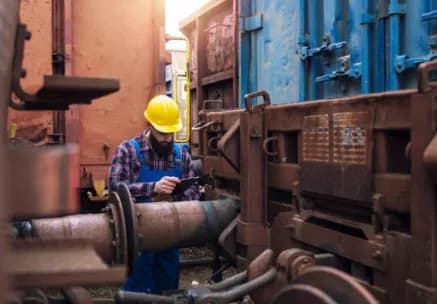
Corrosion and control of iron facilities in the gas & oil industry
Corrosion and control of iron facilities in the gas & oil industry
Read More
Start Your Oil And Gas Career With These Tips
Start Your Oil And Gas Career With These Tips
Read More
A Petroleum Hydrocarbon: Environmental & Health Effects
A Petroleum Hydrocarbon: Environmental & Health Effects
Read More