The Rise of Telemedicine: Revolutionising Healthcare Access and Delivery
The Rise of Telemedicine: Revolutionising Healthcare Access and Delivery

30/05/2023
Healthcare Management
Healthcare services are embracing the growth in technology in different techniques, and telemedicine visits or services are a great modern way to connect healthcare providers and physicians with patients.
More than that, the telemedicine association is committed to setting new rules and regulations within its general policy to secure healthcare services for patients using convenient distance clinical technology.
Today, we will share complete information about telemedicine, its meaning, and its types—moreover, the associated benefits and challenges to the remote telemedicine process.
What is Telemedicine?
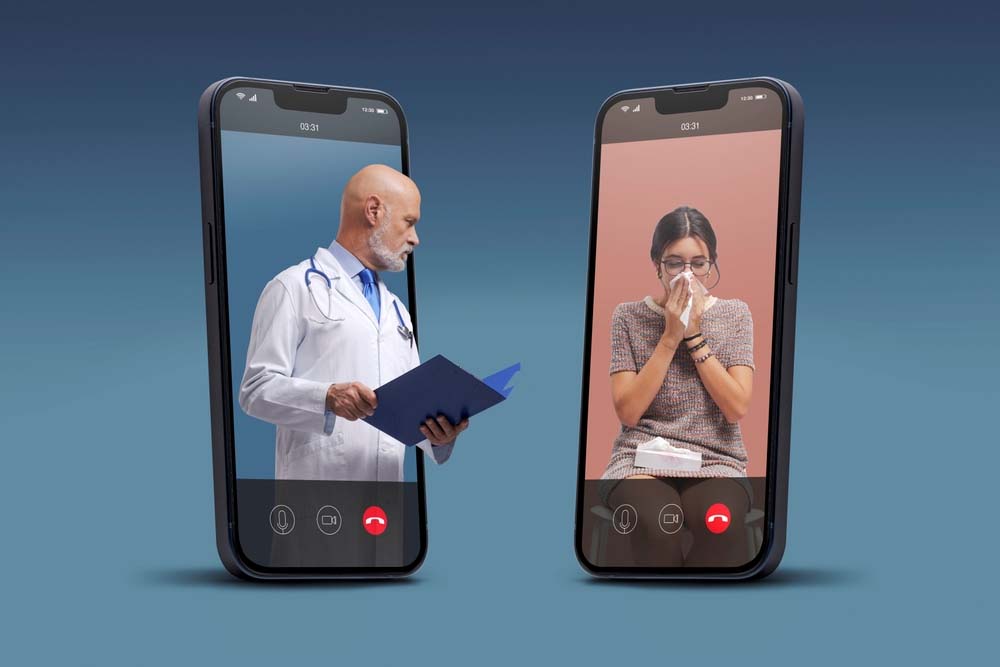
Telemedicine refers to an output patient practice via remote technology or program, where caregivers communicate and interact with any patient via telemedicine systems, including cameras, computers, and electronic sensors.
With telemedicine, also known as telehealth, healthcare providers can monitor, communicate, and cure their patients despite the distance between them with the help of controlled video technology and IOT tool.
With the constant growth of telecommunications medicine, more doctors, pharmacists, and healthcare professionals are taking interactive healthcare training to boost their online medical and clinical service quality.
Types of Telemedicine Services:
There are 4 main types of telemedicine services based on the used technologies and the virtual communication method:
- Real-Time Interactive Mode:
Instant communication between the patient and health care provider through a direct and private video conferencing, audio, or messaging connection.
- Store-and-Forward Mode:
Where medical data is ultimately stored in a safe cloud space and then sent to the telehealth expert or team for consultancy and prescribing.
- Remote Monitoring:
Count on IOT tools that monitor and record patients' primary status—moreover, alert health care specialists when any abnormality happens.
- Telephone Communication:
A telemedicine service through the traditional phone call, whether through regular calls or via internet apps.
This way, patients can talk to the health care service provider in person and ask questions virtually.
Benefits of Telemedicine:
Suppose you are wondering why the telemedicine visit type is becoming increasingly popular. Then, let us share with you the cited benefits of telemedicine treatment:
- Elderly Monitoring:
Telemedicine services provide a significant advantage by remotely monitoring older people while they are at home. Moreover, offer to deliver notifications to the defined clinics in case of any emergency so that medical help will arrive immediately.
Furthermore, this helps old people stay home without worries or fears.
- Boost Patient Autonomy:
Director telemedicine software and video tech exchange primary medical data and information with the patients. Thus, patients will be more aware of their health status and notice any change requiring physical visits.
Thus, this telehealth, in some way or another, will improve patients' medical knowledge.
- Cost-Efficient Solution:
On the one hand, telemedicine is a cost-efficient solution, as telehealth requires fewer medical and administrative resources when compared with physical visits.
On the other hand, telehealth is more affordable for patients, as it will save all the attached costs to physical appointments when it is unnecessary, especially when we are talking about visiting a medical provider in another city or country.
- Better HealthCare Access:
With telemedicine, patients can communicate the needed medical services despite their locations or conditions through this remote communication technology.
Thus, regardless of location, all people can reach quality medical services through video calls or any other virtual visits.
Challenges of Telemedicine:
Like any other healthcare management, telemedicine has challenges impacting its work process. However, we can say that through time all of these challenges are becoming easy to solve:
- Technology:
Although we live in 2023, only some have substantial knowledge or access to telemedicine technology. Thus, they may need professional training to benefit from this technology and reach the medical health care they need.
- Training and Support:
Getting the proper training to use telemedicine or telehealth technology will be more challenging in distant locations and rural areas due to the need for medical and technological expertise.
Thus, they will not be trained to benefit from telemedicine services.
- Regulatory:
Not all countries accept telemedicine services due to privacy and security worries, whether we are talking about telemedicine monitoring technology or shared medical data.
However, the Telemedicine Association constantly upgrades the rules and regulations to protect patients and healthcare providers.
To Sum Up,
Telemedicine significantly impacts healthcare services when done correctly with the right technology, security status, and training.
With amazing growth expectations with all the technology development around us.